Starting a brand and preparing a production order are different jobs. A mood board can establish a look, but it cannot tell a pattern maker where a waistband should sit or tell a buyer whether a price covers a top, a pair of leggings, or the whole outfit. If you are working out how to start a fitness clothing line, the useful first step is to make your initial styles specific enough to discuss, quote, and sample.
That does not mean arriving with every technical decision solved. It means identifying what you want, what you already know, and where you need development support. The work below follows a collection from that first brief to the point where a production order can be confirmed.
| Stage | Buyer Input | Confirmation Needed |
|---|---|---|
| First collection | Intended customer, activities, styles, selling unit, and size range | A defined assortment rather than an open-ended design list |
| Development route | References, drawings, samples, and a list of missing specifications | What the brand supplies and what needs development |
| Product brief | Construction details, measurement points, material requirements, and quantity breakdown | A shared specification version and clearly identified open decisions |
| Quotation | The same brief and quantities for each request | Unit, inclusions, minimums, exclusions, and validity |
| Sample revision | Measured results, fit observations, and annotated photographs | Accepted details, requested changes, and whether another sample is needed |
| Production release | Final specification, approved sample reference, and purchase details | Written agreement on the order scope, terms, and schedule |
Define Your First Fitness Clothing Collection
A yoga legging, a running short, and a casual training top belong to the same broad market, but they do not solve the same product problem. Decide which customer and activity your first collection serves before adding styles. Otherwise, fabric selection and fit development become a series of unrelated decisions.
Starting a Fitness Clothing Brand: Decide What You Are Actually Selling
Write a short line for every proposed product: garment type, intended fit, size range, and selling unit. A coordinated top and legging may be marketed together while still being ordered separately. Make that distinction explicit from the first inquiry.
Check the assortment as a whole. Can the intended customer find the sizes they need? Does adding another color leave enough quantity for the existing size range? A collection plan is more useful than a large style list when it shows how the products will be bought and sold.
Choose a Development Route
The right starting point depends on the materials you have. There is a difference between developing an original garment from drawings and asking about changes to a referenced style. If you are unsure which route fits, use the OEM vs ODM guide to brand inputs and approvals for that comparison.
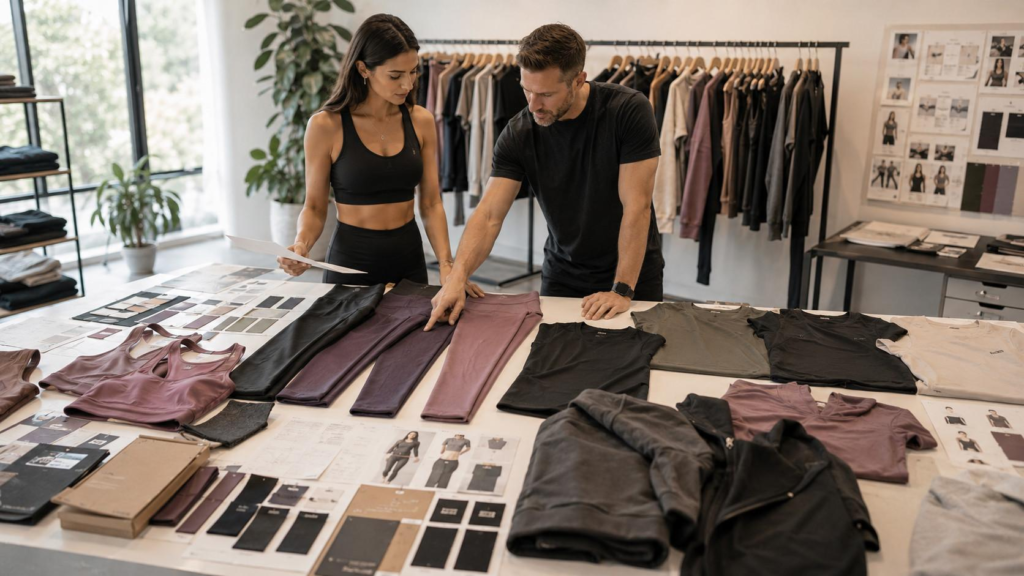
Bailing Apparel starts the discussion with your product photos, design drawings, or product information. Its OEM/ODM development support includes pattern and fit work, material selection, and help completing technical specifications. Explain what you already have and which decisions you need help resolving so the development work can be agreed for the particular style.
Keep supplier selection separate from product development. The activewear manufacturer sourcing and vetting guide addresses that earlier decision. Once you begin discussing a style, the question becomes what both parties need to establish before it can be sampled.
Prepare a Production-Ready Product Brief
You do not need to disguise an unfinished specification as a finished tech pack. Send what you have and identify the gaps. For a buyer considering how to start a gym clothing brand, a clearly annotated reference can be a more useful starting point than a polished presentation that leaves fit and construction unexplained.
Design References and Construction Details
Label references by purpose. One image might show the silhouette, another the pocket opening, and another the seam placement. Mark which details belong in your design. A photograph does not establish the fiber composition, hidden lining, or support level.
Specify details that affect the garment: waistband shape, neck opening, straps, closures, hems, pockets, and branding position. Where a decision is open, write a question instead of letting the recipient guess.
Fabric Requirements, Measurements, and Size Breakdown
With Bailing Apparel, the fabric discussion comes before garment sampling. Share the material you would like to use. If you have not selected one, explain your target price and the hand feel you want so the team can recommend fabric options. A nylon-and-spandex percentage alone is not a complete material instruction: discuss weight, construction, finish, and suitability for the garment as well. If opacity or recovery matters, agree on how it will be evaluated rather than relying on the fabric name.
Keep body measurements and finished-garment measurements distinct. Label the units, reference size, and points of measurement. Explain whether a width is measured flat or as a circumference, and whether a measurement is taken relaxed or extended. Those distinctions matter when comparing the sample with the chart.
Product Brief Example: A Hypothetical Yoga Legging
The following is an illustrative buyer request, not a Bailing Apparel product specification, customer order, or promise of available options.
| Field | Example Buyer Input |
|---|---|
| Product and selling unit | High-waist yoga legging, sold and quoted as one garment; no matching top included. |
| Design references | A front and back sketch identifying the waistband shape, seam lines, and requested side pocket. |
| Material request | A matte nylon/spandex knit. Request suitable material options; composition, weight, and finish remain to be selected. |
| Fit and measurements | Fitted silhouette. Supply a separate chart with waist, hip, rise, inseam, and leg-opening measurement methods. Reference size and grading require agreement. |
| Colors and quantities | Black and navy requested. Attach proposed quantities by color and size for feasibility review; these are not confirmed available colors. |
| Branding and delivery | Provide logo artwork and proposed placement, label requirements, and the delivery destination. |
| Questions for development | Which material suits the design? What pocket construction is feasible? What needs confirmation before a sample can be quoted? |
The brief separates requests from decisions. It gives a development team something concrete to review without inventing measurements, production quantities, or material performance.
Request Quotes on a Comparable Basis
Before comparing prices, compare what is being priced. Use the same brief version and quantity breakdown for each request. If a supplier proposes a different fabric or omits branding, record that difference beside the quote.
Quantities by Style, Color, and Size
Ask how the minimum applies: per order, style, color, or another grouping. Check that the proposed size breakdown is acceptable. Keep requested quantities separate from the supplier’s confirmed minimums.
Then resolve the unit. “Per piece” is not enough if your collection includes sets. Ask whether a quotation covers one garment or the complete combination. Clarify overlapping quantity tiers instead of assigning a price to a boundary quantity yourself.
Clarify What Each Quote Includes
- Garment and fabric specification used for pricing.
- Currency, quotation unit, quantities, and validity.
- Sample or development work charged separately.
- Logo application, labels, hangtags, and packaging included.
- Delivery destination, shipping scope, and any excluded charges.
Do not turn an incomplete quotation into a launch budget. Identify what remains open and request a revised quote when a specification change affects the scope.
Review Samples Before Approving Bulk Production
Once the size requirements are confirmed, Bailing Apparel arranges garment sampling. The completed garment sample is sent to the customer together with fabric color cards, so the garment and color references can be reviewed side by side. For anyone learning how to start a workout clothing line, the next task is giving feedback another person can act on.
Check Fit, Measurements, and Construction
Measure at the agreed points before discussing the overall fit. Review the garment on an appropriate fit model and through movements relevant to its intended use. A waistband that feels restrictive may need a different adjustment from a leg opening that simply measures below the agreed specification.
Review pocket access, seams, closures, and branding placement as well as appearance. Discuss appropriate checks for important material characteristics. A casual wear trial is not evidence for a certified performance claim.
Record Revisions and Approval Decisions
Replace “make it more comfortable” with an observation and a question the pattern maker can work with. For example, a hypothetical comment could read: “The waistband pulls downward during a squat. Please review the rise and waistband position against the marked fit photographs.” This records an observation without prescribing an unsupported pattern correction.
Identify the sample version, label photographs, and separate accepted details from requested changes. Bailing Apparel makes revisions based on your feedback and prepares another garment sample when needed. If a fabric change could affect fit, discuss which measurements or construction details need another review. Keep the specification aligned with the agreed changes so the revised sample is not made from an older file.
Confirm Specifications and Order Terms
Approval should refer to an identifiable garment and document version. Reconcile the final sample comments, measurement chart, materials, and quotation before confirming the order.
For a Bailing Apparel order, confirm the final garment sample and the specifications it represents. Bulk production is arranged after the customer approves that final sample and Bailing Apparel receives the bulk-order deposit. Record the agreed quantities, branding, packaging, inspection arrangements, commercial terms, and schedule alongside the approved product reference.
Keep one person responsible for communicating the brand’s approval. If a detail changes afterward, obtain confirmation of its effect on price, minimums, or timing before assuming the change is included.
Your Sourcing-to-Production Checklist
- The first assortment identifies each style, size range, and selling unit.
- References distinguish required details from development questions.
- Material requests and selected specifications are clearly separated.
- The size chart identifies units and measurement methods.
- The quote matches the current brief and quantity breakdown.
- MOQ rules, quotation units, inclusions, and exclusions are understood.
- Sample comments identify accepted details and outstanding revisions.
- The approved sample and specification versions are recorded.
- Order quantities, commercial terms, and schedule are confirmed in writing.
To discuss your collection, send Bailing Apparel your product references and development brief. Include the intended use, available measurements, proposed quantities, delivery destination, and the decisions for which you need support. A specific brief makes the next conversation about your garments rather than assumptions.